

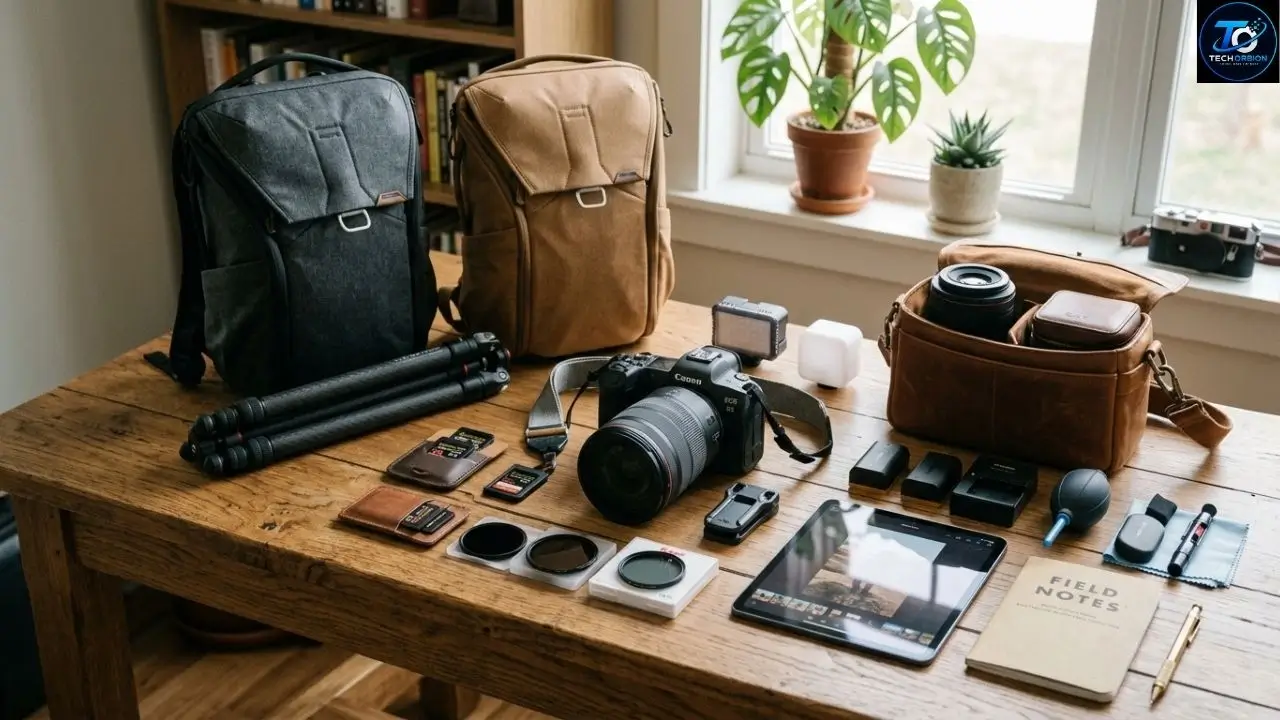
Taking good photos is not only about owning a great camera. The right Camera Accessories can make shooting easier, protect your equipment, improve image quality, and give you more creative control. A simple tripod can help you take sharp night photos, while a spare battery can save a long photo session when your camera battery runs out.
Whether you use a DSLR, mirrorless camera, action camera, or even a smartphone, there are accessories for almost every type of photographer. However, you do not need to buy everything at once. The best approach is to understand what each accessory does and choose items that match your shooting style.
This guide explains the most useful camera gear, what it is used for, what is worth buying, common mistakes to avoid, and how to build a practical camera kit without wasting money.
Table of Contents
- What Are Camera Accessories?
- Essential Camera Accessories for Every Photographer
- Camera Accessories for Different Types of Photography
- How to Choose the Right Camera Gear
- Benefits, Mistakes, and Expert Tips
- Frequently Asked Questions
- Conclusion
What Are Camera Accessories?
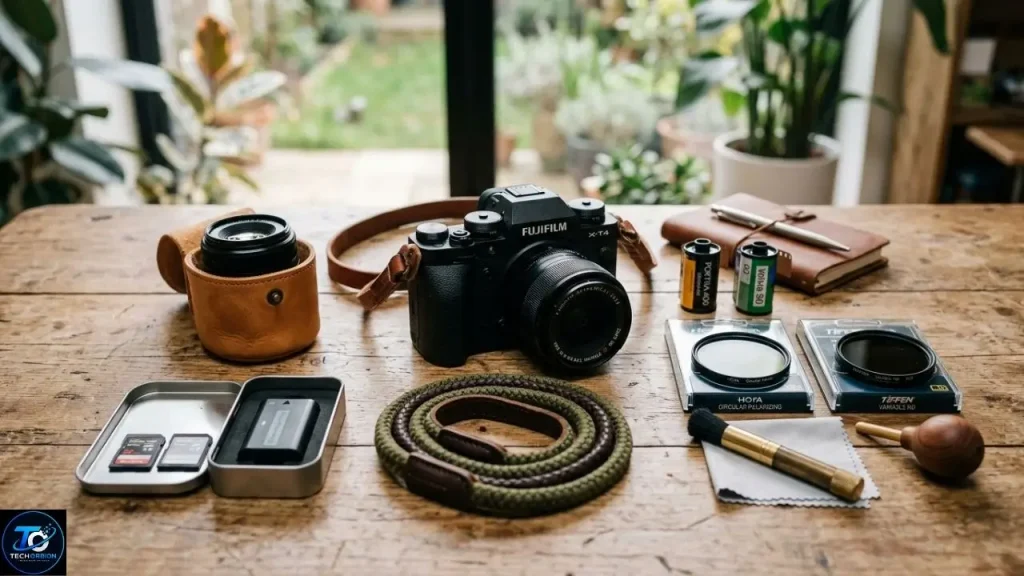
Camera accessories are extra pieces of equipment that work with a camera but are not always included when you buy the camera body. They can help with stability, lighting, storage, protection, sound, power, and image quality.
Some accessories are useful for almost everyone. For example, a memory card gives you space to save photos and videos, while a camera bag protects your equipment during travel. Other products are made for specific situations. A microphone is useful for video creators, while a flash can help photographers who often work in dark rooms.
Why Do Camera Accessories Matter?
A camera can produce excellent images on its own, but accessories can remove many common problems.
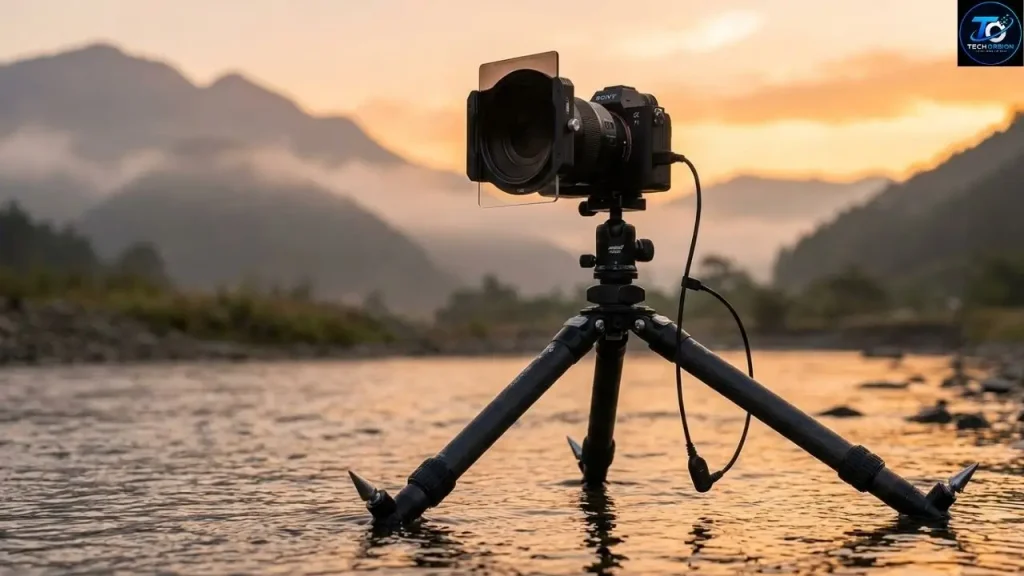
For example, imagine taking a landscape photo at sunset. You may need a slow shutter speed because there is not much light. Holding the camera by hand can cause blur. A tripod keeps the camera still and helps you capture a sharper image.
Accessories can also make photography more comfortable. A good camera strap reduces the chance of dropping your camera. A spare battery lets you continue shooting when the original battery becomes empty. Extra memory cards prevent you from running out of storage during important events.
The key is to buy accessories based on your actual needs rather than simply collecting expensive equipment.
Essential Camera Accessories for Every Photographer
Some pieces of camera gear are useful for beginners, hobby photographers, travelers, and professionals alike. These accessories should usually be considered before buying specialized equipment.
Tripod
A tripod is one of the most useful accessories for photography. It has three legs and holds the camera steady while you take a picture.
Tripods are especially helpful for landscapes, night photography, portraits, long exposures, product photography, and video recording. They are also useful when you want to appear in your own photo because the camera can remain in one position while you use a timer or remote.
When choosing a tripod, look at its maximum weight capacity, height, folded size, and overall build quality. A very cheap and weak tripod may shake in the wind or fail to hold a heavier camera safely.
Camera Bag
A camera bag protects your equipment from scratches, dust, bumps, and weather. It also makes carrying multiple accessories much easier.
Choose a bag based on the amount of equipment you own. A small shoulder bag may be enough for one camera and one lens. If you carry several lenses, a flash, batteries, and other gear, a backpack with padded compartments is usually more practical.
Memory Cards
Memory cards store your photos and videos. The correct card depends on your camera and the type of files you create.
For video and burst photography, read and write speeds matter. A slow card can become a problem when recording high-resolution video or taking many photos quickly.
Always check your camera manufacturer’s recommended card type and speed before buying.
Spare Batteries
A spare battery is a small investment that can prevent a major problem.
Battery life can change depending on the camera, temperature, screen use, video recording, and other settings. If you are traveling or photographing an event, carrying at least one fully charged spare battery is a smart habit.
Keep batteries in a safe case and avoid exposing them to extreme heat.
Camera Strap
A strap helps keep your camera secure while you walk or move around. The strap that comes with your camera may be perfectly fine, but some photographers prefer wider or more comfortable designs.
A good strap should feel secure without putting too much pressure on your neck or shoulder.
Lens Cleaning Kit
Dust and fingerprints on a lens can reduce image quality. A basic cleaning kit can help you keep your equipment clean.
A useful kit may include:
- Air blower
- Lens cleaning cloth
- Lens-safe cleaning solution
- Soft brush
- Sensor cleaning products, when appropriate
Never use rough household materials to clean a camera lens. The glass and coatings can be damaged easily.
Camera Remote or Shutter Release
A remote shutter release allows you to take a picture without physically pressing the camera’s shutter button.
This is useful for long-exposure photography because touching the camera can create small vibrations. It is also useful for self-portraits, wildlife photography, and studio work.
Camera Accessories for Different Types of Photography
There is no single list of accessories that works for every photographer. The best setup depends on what you photograph and where you shoot.
Travel Photography
Travel photographers usually need equipment that is lightweight and easy to carry.
A practical travel kit may include a camera bag, spare battery, memory cards, compact tripod, cleaning cloth, and power bank if compatible with the camera.
Avoid carrying every accessory you own. Extra weight can make a trip less enjoyable. Think about the places you will visit and the photos you expect to take.
Portrait Photography
Portrait photographers often benefit from lighting equipment. An external flash, softbox, reflector, or continuous light can help control the direction and softness of light.
A reflector is particularly useful for beginners. It can bounce existing light toward the subject and brighten darker areas of the face without requiring complicated equipment.
Landscape Photography
Landscape photographers often use a sturdy tripod, remote shutter release, and lens filters.
A polarizing filter can reduce certain reflections and help make skies and foliage look more balanced in suitable conditions. Neutral density filters reduce the amount of light entering the lens, which can allow longer exposures during bright conditions.
Sony’s official lens collection includes different prime and zoom lenses for photographers with different shooting needs.
Filters should be chosen carefully because low-quality filters can affect image quality.
Wildlife Photography
Wildlife photography often requires long lenses, fast memory cards, spare batteries, and a sturdy support system.
A monopod can be useful when a full tripod feels too slow or heavy. Some photographers also use camouflage covers or protective rain covers depending on the environment.
Patience is just as important as equipment. Expensive gear cannot replace good timing and knowledge of animal behavior.
Video and Vlogging
Video creators have different needs from photographers.
A good external microphone can make a major difference because viewers can tolerate average video quality more easily than poor sound.
Other useful video accessories include:
- Small tripod or tabletop stand
- Camera cage
- LED light
- External microphone
- Headphones
- Spare batteries
- Fast memory cards
Always check compatibility before buying microphones, cages, cables, and other specialized equipment.
How to Choose the Right Camera Gear
Buying accessories can quickly become expensive. The best way to avoid wasting money is to start with the problems you actually experience.
Before buying anything, ask yourself: What do I photograph? Where do I shoot? What problem am I trying to solve? How often will I use the accessory?
For example, if your photos are blurry because you shoot at night, a tripod may be more useful than an expensive filter. If your camera battery regularly dies during trips, a spare battery should have a higher priority.
Camera Accessories Comparison
| Accessory | Main Purpose | Best For | Priority |
| Tripod | Keeps camera steady | Landscapes, night photos, video | High |
| Camera Bag | Protects equipment | Travel and everyday use | High |
| Memory Card | Stores photos/videos | Everyone | High |
| Spare Battery | Provides extra power | Travel and events | High |
| Lens Cleaning Kit | Removes dust and fingerprints | Everyone | High |
| External Flash | Adds controlled light | Portraits and events | Medium |
| Microphone | Improves audio | Video creators | Medium |
| Filters | Controls light/reflections | Landscape photographers | Medium |
| Camera Cage | Adds mounting options | Video creators | Low to Medium |
| Gimbal | Stabilizes moving video | Videographers | Specialized |
Check Compatibility
Not every accessory works with every camera. This is especially important for batteries, memory cards, lenses, flashes, microphones, cages, and electronic accessories.
Before purchasing, check:
- Camera model
- Lens mount
- Memory card format
- Battery model
- Accessory connection
- Weight capacity
- Required cables or adapters
A product that looks perfect may be useless if it does not fit your camera.
Do Not Always Buy the Most Expensive Option
Higher prices do not automatically mean better results.
A professional photographer may need expensive equipment because it is used every day in demanding conditions. A beginner who takes family photos on weekends may not need the same equipment.
Spend money where it solves a real problem. Good technique, lighting, composition, and practice often have a bigger effect on your photos than another expensive accessory.
Benefits, Mistakes, and Expert Tips
The right accessories can make photography more enjoyable and reliable. They can protect your equipment, improve stability, provide better lighting, extend shooting time, and make video production easier.
However, buying too many accessories can create new problems. A large collection of equipment is heavy, expensive, and difficult to organize. You may also spend more time changing equipment than actually taking photographs.
Common Mistakes to Avoid
1. Buying accessories before understanding your camera
Learn your camera first. You may discover that you do not need many extra products.
2. Choosing the cheapest option every time
Very cheap equipment can sometimes be unreliable. This is especially important for tripods, batteries, chargers, and memory cards.
3. Ignoring storage and backups
A memory card can fail. Important photos should be backed up to another storage location as soon as practical.
4. Carrying too much gear
Take only what you are likely to use. A lighter kit is often easier to handle.
5. Forgetting protection
Rain, dust, sand, and accidental bumps can damage expensive equipment. Use appropriate bags and protective covers when needed.
Practical Tips for a Better Camera Kit
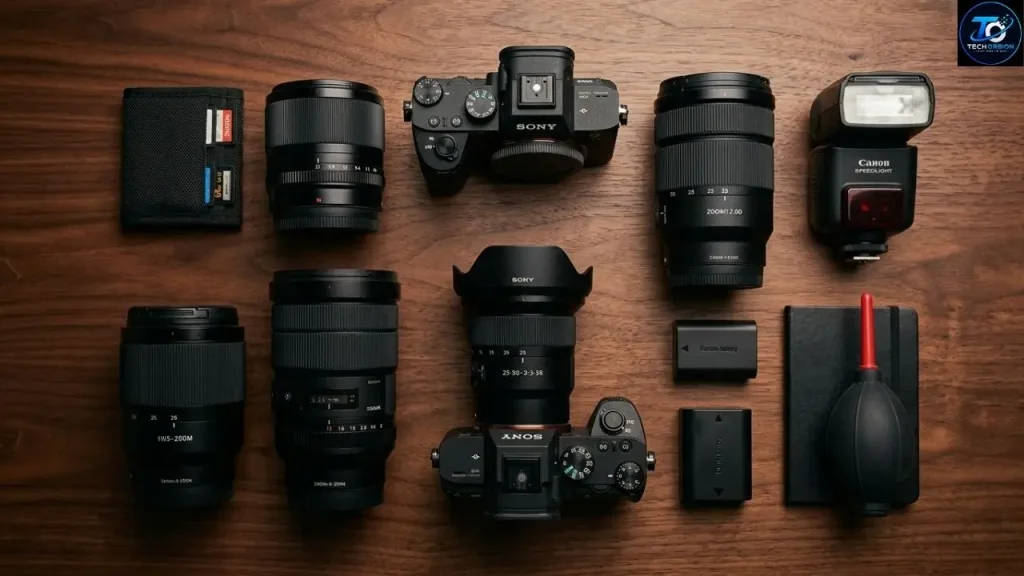
Start with the basics. A beginner can usually build a useful kit around a camera, lens, memory card, spare battery, bag, cleaning supplies, and tripod.
As your photography skills improve, identify the limitations you regularly face. If lighting is the problem, consider lighting equipment. If movement is the problem, consider stabilization. If sound is the problem, improve your microphone.
Keep your equipment clean and organized. Charge batteries before important shoots and format memory cards using the camera’s recommended procedure after safely backing up your files.
Most importantly, learn to use the equipment you already own. A photographer who understands light, composition, focus, and exposure can often create better images with simple gear than someone who owns expensive equipment but does not know how to use it.
Frequently Asked Questions
1. What are the most important camera accessories for beginners?
A memory card, spare battery, camera bag, cleaning kit, and tripod are good starting points. The exact list depends on your camera and photography style.
2. Do I really need a tripod?
Not everyone needs one immediately. However, a tripod is extremely useful for night photography, landscapes, long exposures, self-portraits, and stable video recording.
3. Are expensive camera accessories worth it?
Sometimes, but not always. Professional users may benefit from premium build quality and reliability. Beginners should focus on accessories that solve a real problem rather than buying the most expensive products.
4. Which accessory improves photo quality the most?
There is no single answer. A tripod can improve sharpness in slow-shutter situations, while good lighting can dramatically improve portraits and indoor photography. Learning photography basics is often more important than buying another accessory.
5. How should I store camera accessories?
Keep equipment in a clean, dry, protected place. Use padded compartments for cameras and lenses, keep batteries safely stored, and protect equipment from excessive heat, moisture, dust, and direct sunlight.
Conclusion
The best Camera Accessories are not necessarily the most expensive ones. They are the products that solve problems and make photography easier. A tripod can improve stability, a spare battery can prevent interruptions, and a good camera bag can protect valuable equipment.
Start with essential items and add specialized gear as your skills and needs grow. Whether you enjoy travel photography, portraits, landscapes, wildlife, or video, there is no need to buy everything at once.
Learn your camera, understand what limits your current setup, and invest in equipment that genuinely helps. With the right combination of knowledge, practice, and useful accessories, you can get better results without carrying an entire camera store in your bag.
